
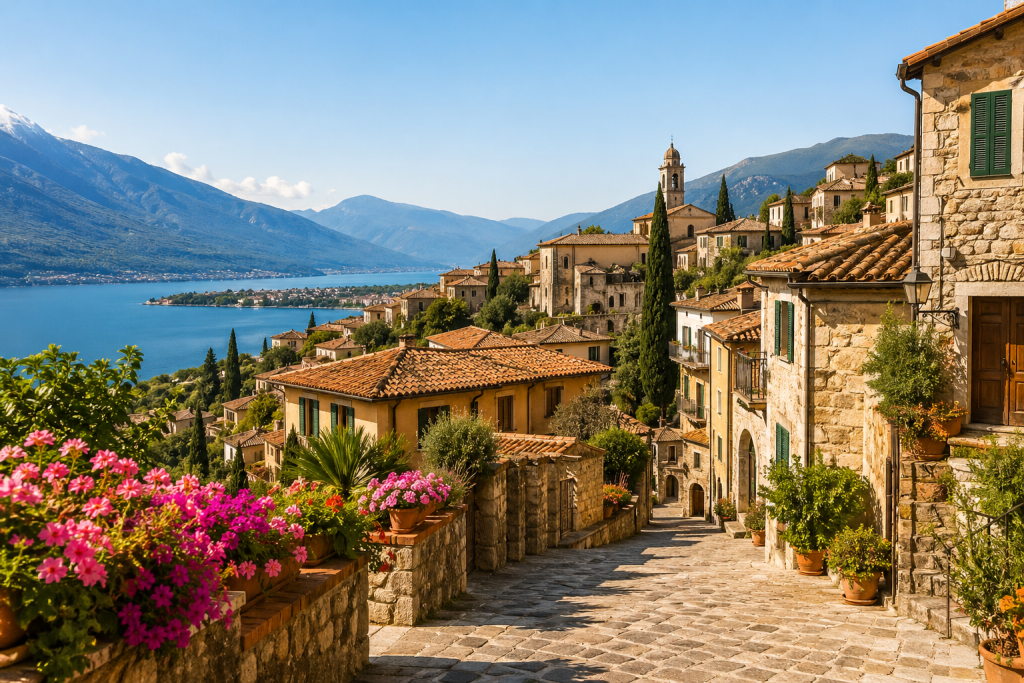
Best places to live in Italy for Retirees
Retiring to Italy isn’t just about choosing “somewhere beautiful.” The right place needs to work for your day-to-day life: easy access to healthcare, a climate you can tolerate year-round, a walkable routine (or a realistic car plan), and a budget you can sustain.
This guide is built to help you shortlist 2–3 locations you can confidently explore next, using a simple decision framework and clear trade-offs.
Table of Contents
Quick answer: best places based on lifestyle
If you want a fast shortlist, start here. These are region-level picks because they’re the best way to narrow your options before drilling down to province and town.
1) Tuscany (premium “classic Italy,” best for culture + amenities)
Choose Tuscany if: you want a refined lifestyle, strong services, and lots of town choices – while accepting higher housing costs in the most famous areas.
Trade-offs: premium pricing in hotspots; some hill towns mean stairs and slopes.
- Best for: culture, food, established expat networks, variety of towns
- Watch-outs: cost and crowds in the most popular pockets
- Next step: Explore towns in Tuscany, then compare towns in Tuscany by walkability + hospital access.
2) Umbria (mid-range “Tuscany feel, calmer pace”)
Choose Umbria if: you like central Italy, want a slower pace than Tuscany, and care about value without “remote” living.
Trade-offs: fewer big-city amenities; some towns are very hilly.
- Best for: atmosphere, value, central positioning, quieter daily life
- Watch-outs: mobility in hill towns; fewer transport options than major regions
- Next step: View all towns in Umbria and shortlist those with flatter centers and reliable access to hospitals.
3) Marche (mid-range “under-the-radar coast + towns”)
Choose Marche if: you want a less-touristy region with a mix of coastline and inland towns.
Trade-offs: public transport can be limited depending on where you settle.
- Best for: balance of beach access + traditional towns, value
- Watch-outs: car dependence in many areas
- Next step: Explore towns in Marche and filter by “near rail line” if you want easier mobility.
4) Liguria (premium “mild climate + coastal living”)
Choose Liguria if: you want a milder coastal climate and good connectivity in parts of the region.
Trade-offs: pricing rises quickly near the most famous Riviera areas; steep terrain is common.
- Best for: climate, coastal lifestyle, rail-connected towns in some stretches
- Watch-outs: hills/stairs; premium housing
- Next step: Compare towns in Liguria by “flat walking routes” and proximity to clinics/hospitals.
5) Puglia (budget-to-mid “sun + value + real town life”)
Choose Puglia if: you want southern warmth, strong character, and better affordability than many northern/central regions.
Trade-offs: summer heat, and services/transport vary by province and town.
- Best for: affordability, lifestyle, food culture, many liveable mid-size towns
- Watch-outs: heat tolerance; some areas feel quiet off-season
- Next step: Explore towns in Puglia and shortlist those with a strong year-round community.
6) Abruzzo (budget “big value, mountains + coast”)
Choose Abruzzo if: you’re value-focused and like the idea of having coast and mountains within reach.
Trade-offs: depending on town, you may need a car and patience with bureaucracy.
- Best for: affordability, authentic community feel, scenery variety
- Watch-outs: transport gaps; choosing the right hub matters
- Next step: View all towns in Abruzzo and prioritize those near hospitals and regional rail.
7) Sicily or Sardinia (budget-to-mid “island lifestyle”)
Choose an island if: you want distinctive culture, strong identity, and often better housing value in Sicily or Sardinia.
Trade-offs: island logistics (specialist healthcare access, flights/ferries) and bureaucracy can feel slower.
- Best for: sunshine, coastal life, affordability in many places
- Watch-outs: summer heat, travel logistics, admin pace
- Next step: Explore towns in Sicily / explore towns in Sardinia and shortlist towns with easy airport access.
How to choose the right place (retiree scorecard)
Most “best places” lists mention cost, healthcare, and climate – but they rarely show you how to decide. Use this Retiree Scorecard to compare regions and towns consistently.
The Retiree Scorecard (6 factors that drive a good shortlist)
Rate each place from 1 (weak) to 5 (strong):
- Cost of living
- Rent or purchase prices, utilities, everyday spending
- Reality check: “Affordable” varies hugely by neighborhood and season
- Healthcare access
- Distance to a good hospital, specialist availability, private options if needed
- Practical check: can you get routine care without major travel?
- Climate comfort
- Summer heat, humidity, winter damp/cold, shoulder-season livability
- Retiree lens: “warm” isn’t always “comfortable” if heat limits daily walking
- Walkability & mobility
- Can you live daily life on foot without constant stairs/hills?
- Look for: flat historic centers, compact towns, accessible grocery/pharmacy
- Transport
- Train access, airports, regional connections, and realistic “no-car” living
- Key question: can you get to healthcare and bigger-city services easily?
- Community
- A social routine you can sustain: local community, expats, clubs, language support
- Retiree lens: isolation is the hidden cost of “cheap” locations
How to use it (the shortlist method)
- Start with 2–3 non-negotiables (example: “near a hospital,” “mild summers,” “walkable center”).
- Choose one primary region and one backup region that meet those non-negotiables.
- In each region, shortlist 2–3 towns that score well on mobility + healthcare + transport.
- Then do your deeper due diligence on those towns (housing, services, neighborhoods).
This approach keeps you from falling into the common trap: picking a place based on a vacation vibe instead of day-to-day practicality.
Compare 3 Italian Towns for Retirement
Rate each town from 1 to 5 across each retirement factor. The total score helps you compare which town may be the strongest fit for your lifestyle.
| Decision Factor | What to Check | Town 1 | Town 2 | Town 3 |
|---|---|---|---|---|
| Cost of Living | Rent, property prices, utilities, groceries, eating out | |||
| Healthcare Access | Distance to hospital, GP availability, specialists, private options | |||
| Climate Comfort | Summer heat, winter damp/cold, humidity, year-round comfort | |||
| Walkability & Mobility | Flat streets, stairs, hills, access to shops/pharmacy on foot | |||
| Transport Links | Train station, airport access, buses, car-free living potential | |||
| Community & Lifestyle | Year-round population, expat presence, clubs, social routine |
0 / 30
0 / 30
0 / 30
Best places to live in Italy (by budget)
Below is the budget-first view, with explicit trade-offs—because a place can be “cheap” but still expensive if it forces a car, frequent travel for healthcare, or limits your quality of life.
Premium locations
Tuscany (select towns, not the most famous hotspots)
Why it works: strong services, culture, and a deep bench of towns with different “feels.”
Trade-offs: costs climb in marquee areas; hill towns can challenge mobility.
Best-fit retirees often choose Tuscany when they want:
- A polished lifestyle with strong amenities
- Easy day trips, events, and cultural life
- Options: larger hubs, mid-size towns, and quieter countryside areas
Smart strategy:
- Don’t default to the most famous cities. Instead, compare towns in Tuscany by:
- walkability (flat vs hilly)
- access to hospitals/clinics
- rail connections
Liguria (mild coastal climate, but terrain matters)
Why it works: attractive climate and coastal routine in parts of the region.
Trade-offs: steep streets, higher housing costs near the best-known areas.
Choose Liguria if your priorities are:
- mild winters
- sea air and a coastal daily rhythm
- rail-connected towns for easier car-light living
Lombardy (premium pockets, big-city proximity)
Why it works: proximity to major services and international links.
Trade-offs: cost can rise sharply; it can feel less “slow Italy” depending on where you choose.
This can be a fit if healthcare access and infrastructure are top-tier priorities—especially if you plan frequent travel.
Mid-range value
Umbria (value + calm, with central positioning)
Why it works: strong “Italian town” feel and good central access to bigger hubs.
Trade-offs: hilly towns are common; transport can vary.
Where Umbria shines for retirees:
- slower pace without feeling remote
- scenic towns with genuine year-round life
- good base for exploring central Italy
Use your scorecard here: mobility + healthcare access should lead the decision. Explore towns in Umbria that have flatter centers or newer residential areas.
Marche (balanced coastal/inland options, often less crowded)
Why it works: variety without the Tuscany price tag in many places.
Trade-offs: car dependence is more likely outside key corridors.
Marche can be excellent if you want:
- smaller cities and practical towns
- a mix of beaches and countryside
- value housing in many areas
A strong next step is to view all towns in Marche and shortlist those with rail links and hospital access.
Emilia-Romagna (practical northern living, strong services)
Why it works: often strong infrastructure and a practical day-to-day routine.
Trade-offs: less “postcard retirement” marketing, and climate differs from the south.
This region often suits retirees who prioritize services, reliability, and everyday ease over coastal fantasy.
Budget-friendly areas
Abruzzo (big value with coast + mountains)
Why it works: affordability and authentic community feel in many towns.
Trade-offs: you must choose your base carefully for transport and healthcare.
A retiree-friendly approach:
- pick a town that isn’t isolated
- prioritize proximity to hospitals, rail, and year-round services
Then compare towns in Abruzzo by “near hospital” and “rail access.”
Puglia (sun + value, but heat tolerance is key)
Why it works: good lifestyle value, strong culture, and liveable towns.
Trade-offs: summer heat can limit daytime activity; some places feel seasonal.
Puglia is often ideal for retirees who:
- want warmth and southern charm
- want better housing value than many central/northern picks
- are comfortable planning around heat (morning/evening routines, shaded walking routes)
Sicily (low cost potential + rich culture)
Why it works: strong identity, good housing value in many locations.
Trade-offs: bureaucracy pace and summer heat; some specialist services may require planning.
Sicily can be excellent if you choose towns/cities with:
- strong hospitals nearby
- good connections to airports
- year-round neighborhoods rather than purely seasonal areas
Calabria / Basilicata / Molise (deep value, but higher “fit risk”)
Why they work: housing can be very affordable.
Trade-offs: transport, services, and community fit can vary a lot town-by-town.
These regions can work brilliantly for the right retiree—especially if you value quiet life and low costs—but they require stricter shortlisting and on-the-ground validation.
Best towns in Italy for retirees
Tuscany
Consider town types like:
- Lucca (often cited for liveability and charm)
- Arezzo (a practical base vs the most expensive hotspots)
- Siena (beautiful, but evaluate cost and mobility)
Next steps:
Umbria
Good candidates to evaluate for retiree life include:
Next steps:
Marche
Examples to start with:
- Ancona (for transport and services)
- (Explore additional Marche towns) via regional hubs
- Consider coastal vs inland based on your climate preference
Next steps:
Puglia
Examples to research further:
Next steps:
Abruzzo
A practical starting list:
- Pescara (often appears in affordability + connectivity discussions)
- (Add a hill town only if mobility fits)
- Consider a coastal base if you prefer flatter terrain
Next steps:
Sicily
Examples frequently referenced in broader retiree content:
Next steps:
Sardinia
Often discussed around sunshine and lifestyle:
- Cagliari (as a service hub)
- (Add a smaller coastal town only after checking healthcare access and year-round services)
Next steps:
How to narrow down your shortlist
Here’s the practical workflow that turns “Italy is amazing” into a real plan.
Step 1: Choose your top 3 decision drivers
Most retirees end up deciding based on:
- Cost of living
- Healthcare access
- Climate comfort
- Then refining with walkability, transport, and community.
Write your top three as a sentence, for example:
- “I need a walkable town, within reasonable distance of a hospital, with mild summers.”
Step 2: Make 2 shortlists (not 10)
- Shortlist A (primary): one region that fits your non-negotiables
- Shortlist B (backup): one region that fits almost as well but with a different trade-off
Example trade-off pairs:
- Tuscany vs Umbria: more amenities and variety vs calmer value and less crowding
- Liguria coast vs inland Umbria: mild sea climate vs central positioning and affordability
- Puglia vs Sicily: southern warmth + mainland access vs island culture + potentially different cost profile
Step 3: Pick 2–3 towns per region
For each region, select towns that meet:
- a reliable healthcare path (hospital/clinic access)
- a walkable routine (or a realistic transport plan)
- year-round services (not just seasonal living)
Use the research tools:
- “Explore towns in [region]” to discover options
- “Compare towns in [region]” to rank by your scorecard
- “View all towns in [region]” to widen the net once you know your criteria
Step 4: Run the retiree reality check (the trade-offs)
Before you fall in love with a place, confirm:
- Mobility: stairs, steep streets, distance to essentials
- Heat: can you comfortably walk in summer? do you need shade/sea breeze?
- Healthcare: how far is the hospital? can you handle appointments and travel?
- Transport: can you live without a car? if not, are you comfortable driving there?
- Community: can you build a routine and support network?
FAQs
Where are the best places to retire in Italy?
There isn’t one best place – there are best fits. For many retirees, the strongest starting regions are Tuscany, Umbria, Marche, Liguria, Puglia, Abruzzo, and Sicily/Sardinia, depending on budget, healthcare needs, and climate preference.
What are the most affordable places to retire in Italy?
Lower-cost opportunities are often found in Abruzzo, Puglia, Sicily, Calabria, Basilicata, and Molise. The key is to avoid “cheap but isolated” choices by prioritizing healthcare access and transport.
Is Tuscany or Umbria better for retirement?
Tuscany is often better for retirees who want variety, amenities, and a strong cultural calendar (with higher costs in popular areas).
Umbria is often better for retirees who want a calmer pace and better value – while carefully choosing towns for mobility and transport.
Do I need a car to retire in Italy?
It depends on the town. Many smaller towns require a car for easy errands and healthcare access. If you want car-light living, prioritize towns with rail access and a compact walkable center.
What should retirees prioritize when choosing a town?
A practical shortlist usually prioritizes:
– proximity to healthcare
– climate comfort (especially summer heat)
– walkability/mobility
– transport links
– sustainable cost of living
– community and social routine
How do I choose 2–3 places to visit next?
Use the Retiree Scorecard, choose one primary region and one backup, then shortlist 2–3 towns per region. Your goal is not to find “the best place,” but the best 2–3 candidates for your life.